
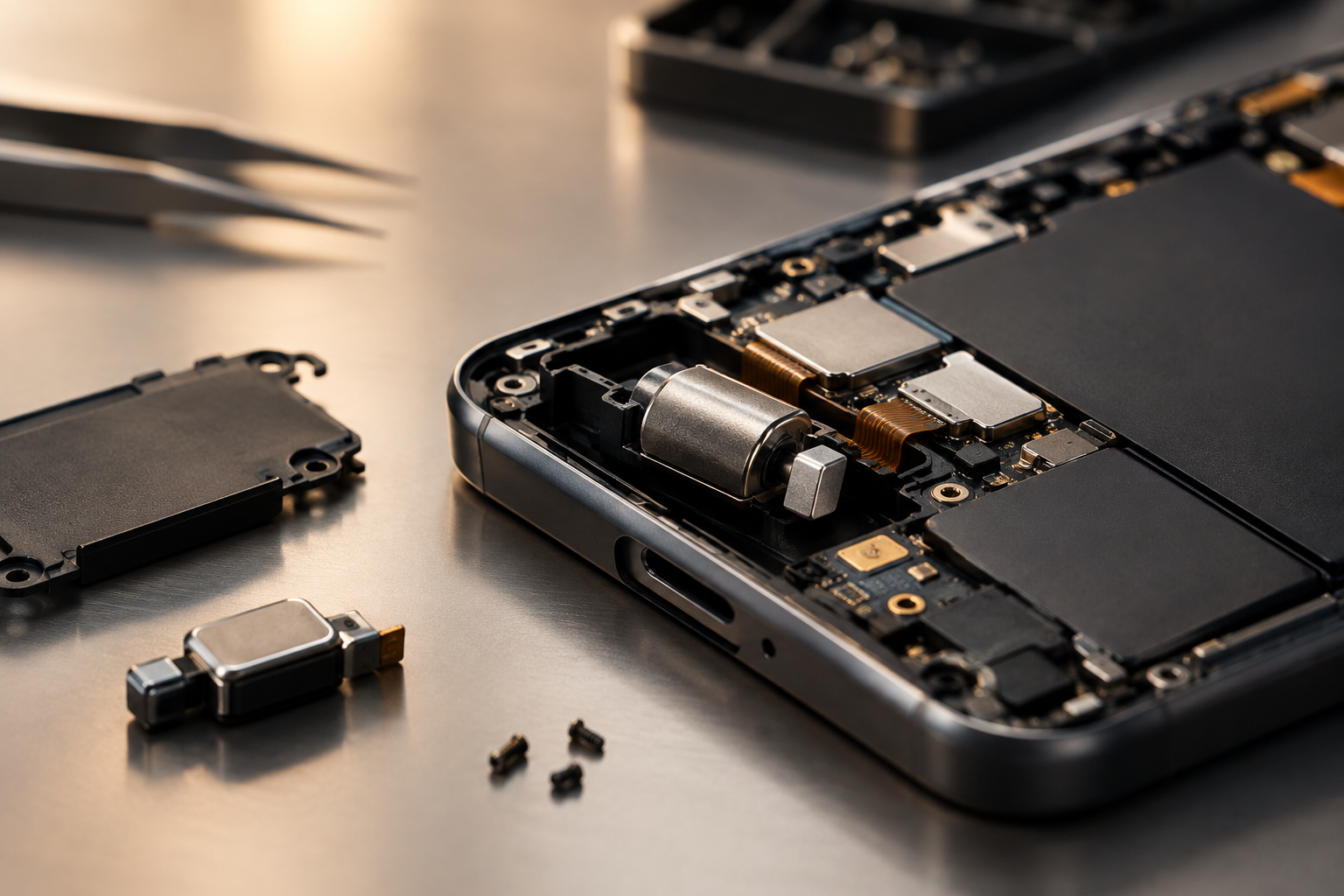
Apple’s legal risk has acquired a very large price tag. A federal jury awarded Taction Technology more than $5.7 billion after finding that Apple infringed claims from two haptics patents, creating a significant overhang for shareholders even before the appeals process begins.
The verdict concerns haptic feedback technology used in Apple’s iPhone and Apple Watch products. That makes the case more consequential than a narrowly isolated patent dispute: It reaches into products at the center of Apple’s consumer technology ecosystem. Still, the jury’s decision is not necessarily the final financial outcome. Apple has stated that it plans to appeal, and the eventual liability could change as the case moves through the legal process.
For $AAPL shareholders, the first point is straightforward: more than $5.7 billion is a substantial headline figure. It represents potential financial exposure that the market cannot simply dismiss, particularly because the dispute involves technology incorporated into major product lines. The award could ultimately be reduced, overturned, or otherwise altered on appeal, but the verdict introduces uncertainty around the size and timing of any potential payment.
That distinction matters. A jury award is not the same as a finalized cash cost, and the assignment provides no basis for calculating a per-share impact or assessing a current stock-price reaction. Investors therefore have a concrete dollar figure, but not a final measure of how the litigation would affect Apple’s financial results or shareholder value.
The legal uncertainty may prove as important as the award itself. Apple’s planned appeal indicates that the company intends to challenge the ruling rather than accept it as the final resolution. The appeal could extend the dispute and delay clarity. Until the legal process advances, shareholders may have to weigh several possibilities: the award could remain broadly intact, be reduced, or fail to stand. Each path would carry a different financial implication.
The underlying technology also raises a broader question for the sector. Haptic feedback is embedded in the way users interact with smartphones and watches, meaning patent claims involving that technology may draw attention beyond this single case. A large verdict can encourage patent holders to pursue claims more aggressively, while technology companies may face greater scrutiny over the intellectual property embedded in widely adopted features.
That does not mean every patent dispute will produce a comparable outcome. Patent litigation turns on the specific claims, evidence and legal findings in each case. But the size of this verdict may sharpen the market’s focus on intellectual-property exposure across the technology industry. Companies that rely on complex hardware and software ecosystems could face heightened investor attention whenever a patent case touches a core product function.
Apple’s scale may provide context, but scale does not eliminate legal uncertainty. The central issue for shareholders is not whether more than $5.7 billion is large in isolation; it is whether the verdict signals a potential precedent for future claims involving technology used across Apple’s products. That question cannot be answered by the jury decision alone.
As CNBC reported, Apple plans to appeal the ruling. Until that process produces a final result, the verdict should be viewed as a serious legal and financial overhang—not as a finalized charge. The market may focus on the headline amount, but disciplined analysis requires separating the jury’s finding from the ultimate outcome.
Bull/Bear Verdict
Bull Case: Apple’s planned appeal could reduce or overturn the more-than-$5.7 billion jury award, limiting the eventual financial impact while preserving uncertainty only as a temporary overhang.
Bear Case: The more-than-$5.7 billion verdict, tied to haptics technology used in the iPhone and Apple Watch, could leave $AAPL shareholders facing substantial legal exposure and broader concern about patent risk across Apple’s product ecosystem.