
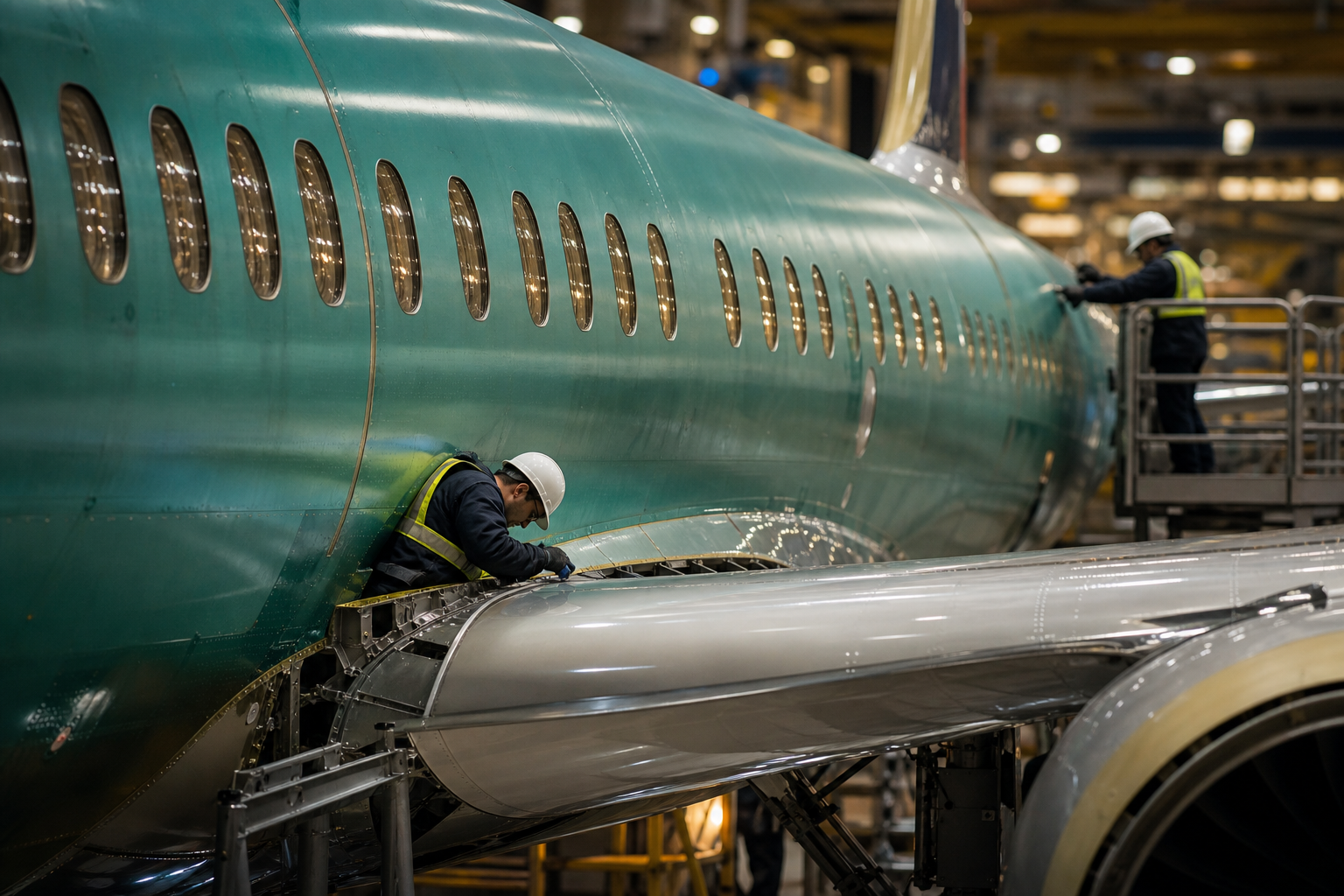
Boeing's recent announcement regarding the ramp-up of its 737 Max production is both a bold statement of intent and a potential key to its financial recovery. After a turbulent few years marred by safety concerns and production delays, the aerospace giant is now aiming to produce 47 jets per month, a figure that reflects renewed confidence in its operational capabilities.
CEO Kelly Ortberg has confirmed that Boeing has met all necessary requirements set forth by the Federal Aviation Administration (FAA), a milestone that not only signifies compliance but also marks a pivotal moment in the company's long road to recovery. The decision to increase production comes at a time when the demand for air travel is on the rise, following a global pandemic that significantly stifled the aviation industry.
The implications of this production increase extend far beyond mere numbers; it addresses the critical issue of Boeing's order backlog. At present, the company has a substantial backlog of orders that reflects the pent-up demand for its aircraft. By ramping up production, Boeing could potentially begin to clear this backlog, thereby improving its revenue streams and restoring investor confidence.
Investor sentiment surrounding Boeing has been cautiously optimistic. The company's ability to increase production could signal a turnaround, but it is essential to recognize the risks that remain. The aviation sector is notorious for its volatility, and while demand is increasing, external factors such as geopolitical tensions and fluctuating fuel prices could impact Boeing's recovery trajectory.
Analysts are closely monitoring how Boeing's production increase will influence its financial metrics in the upcoming quarters. A successful ramp-up would not only boost revenue but could also lead to improved margins, assuming operational efficiencies are realized. Conversely, any hiccups in production or a resurgence of safety concerns could quickly sour investor sentiment, leading to further scrutiny of Boeing's management and operational strategies.
In the broader market context, Boeing's production increase may also affect its competitors. Companies within the aerospace sector will undoubtedly be watching closely to gauge how Boeing's recovery unfolds. A successful ramp-up could force competitors to rethink their own production strategies, leading to a reshuffling of market dynamics.
In summary, while Boeing's decision to boost 737 Max production is a positive indicator of its recovery efforts, the path forward is fraught with challenges. Investors should remain vigilant, as the aviation landscape continues to evolve.
For further details, you can read more on this development here.
Bull/Bear Verdict
Bull Case: The ramp-up of 737 Max production to 47 jets per month could significantly bolster Boeing's revenue and help clear its substantial order backlog, indicating a strong recovery potential.
Bear Case: While the production increase is a positive step, lingering safety concerns and external market volatility may hinder Boeing's ability to maintain investor confidence in the long term.