
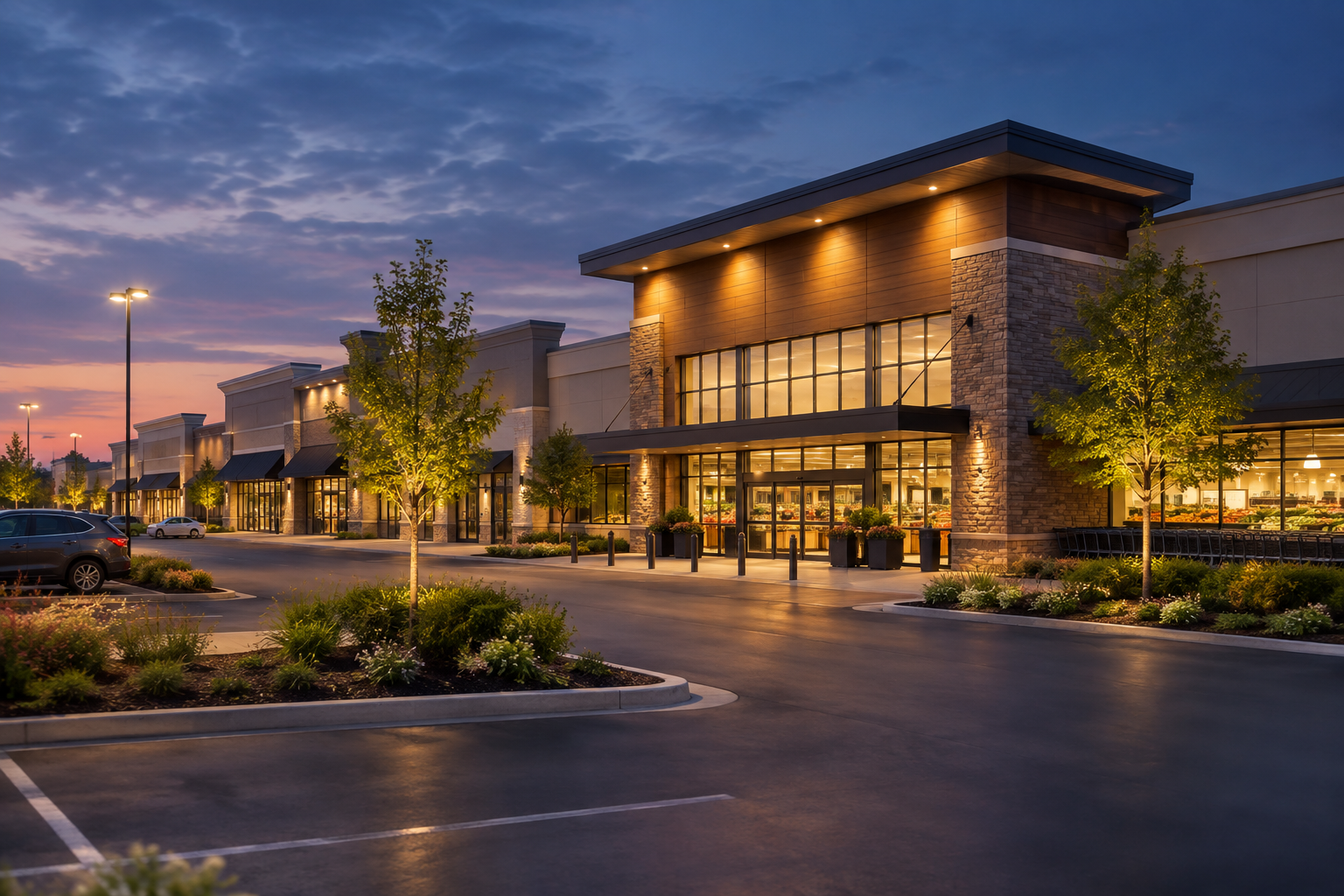
In a market where uncertainty can make investors prize durability over drama, grocery-anchored retail real estate is stepping into the spotlight. Brixmor Property and Everview have agreed to acquire Slate Grocery REIT for $2.34 billion, creating a transaction large enough to put consolidation back on the agenda for U.S. and Canadian income-focused investors.
The deal is more than a corporate handshake. It is a signal that grocery-anchored properties remain important pieces on the retail real estate chessboard—and that scale may matter as REITs navigate a macroeconomic environment that continues to test the appeal of property income and valuations.
According to the reported transaction details, Brixmor Property and Everview’s proposed acquisition values Slate Grocery REIT at $2.34 billion. The assignment does not provide a premium, financing structure, property count, share-price reaction or closing timeline, so those pieces remain outside the known facts.
A sizable bet on grocery-anchored retail
At $2.34 billion, the transaction represents a significant consolidation event in the grocery-anchored retail REIT sector. It brings a sizeable platform into a combination involving Brixmor Property and Everview, potentially concentrating ownership and management of assets tied to a part of retail real estate often viewed as more defensive than discretionary shopping categories.
That defensive reputation is an analytical framework, not a guarantee. Grocery stores provide everyday necessities, and properties anchored by them may benefit from recurring consumer visits even when households become more cautious. Retail centers can also contain services and other tenants that support regular traffic. Those characteristics may make grocery-anchored real estate attractive when investors are looking for stability amid economic uncertainty.
But defensive does not mean immune. Retail properties still face operating costs, tenant-specific challenges, changing consumer behavior and broader real estate valuation pressures. The transaction itself does not establish how Slate Grocery REIT’s assets will perform, nor does it provide evidence of a particular yield or valuation premium.
What it could mean for REIT investors
For income-oriented investors in the United States and Canada, the announcement may sharpen attention on the strategic value of retail REIT portfolios. A large acquisition can suggest that established players see advantages in scale, property concentration or operating reach. It may also encourage investors to compare grocery-anchored platforms more closely, even though the available information does not support conclusions about specific companies’ future returns or distributions.
The bigger question is whether this becomes an isolated transaction or part of a broader sector pattern. One deal cannot prove that additional consolidation is coming. Still, a $2.34 billion agreement could prompt market participants to examine whether other retail REITs might become acquisition candidates or whether comparable assets deserve a different valuation lens.
Any re-rating would depend on factors not supplied here, including financing conditions, property performance, tenant strength and the terms of future transactions. For now, the clearest message is that grocery-anchored retail remains strategically relevant—and that consolidation can turn a defensive property theme into a market-level conversation.
Bull/Bear Verdict
Bull Case: The $2.34 billion acquisition may reinforce the strategic appeal of grocery-anchored retail and could encourage further consolidation or stronger valuation attention across the sector.
Bear Case: The transaction alone does not establish a broader re-rating, and without disclosed details on financing, yields, premiums or property performance, its implications for income-focused investors remain uncertain.