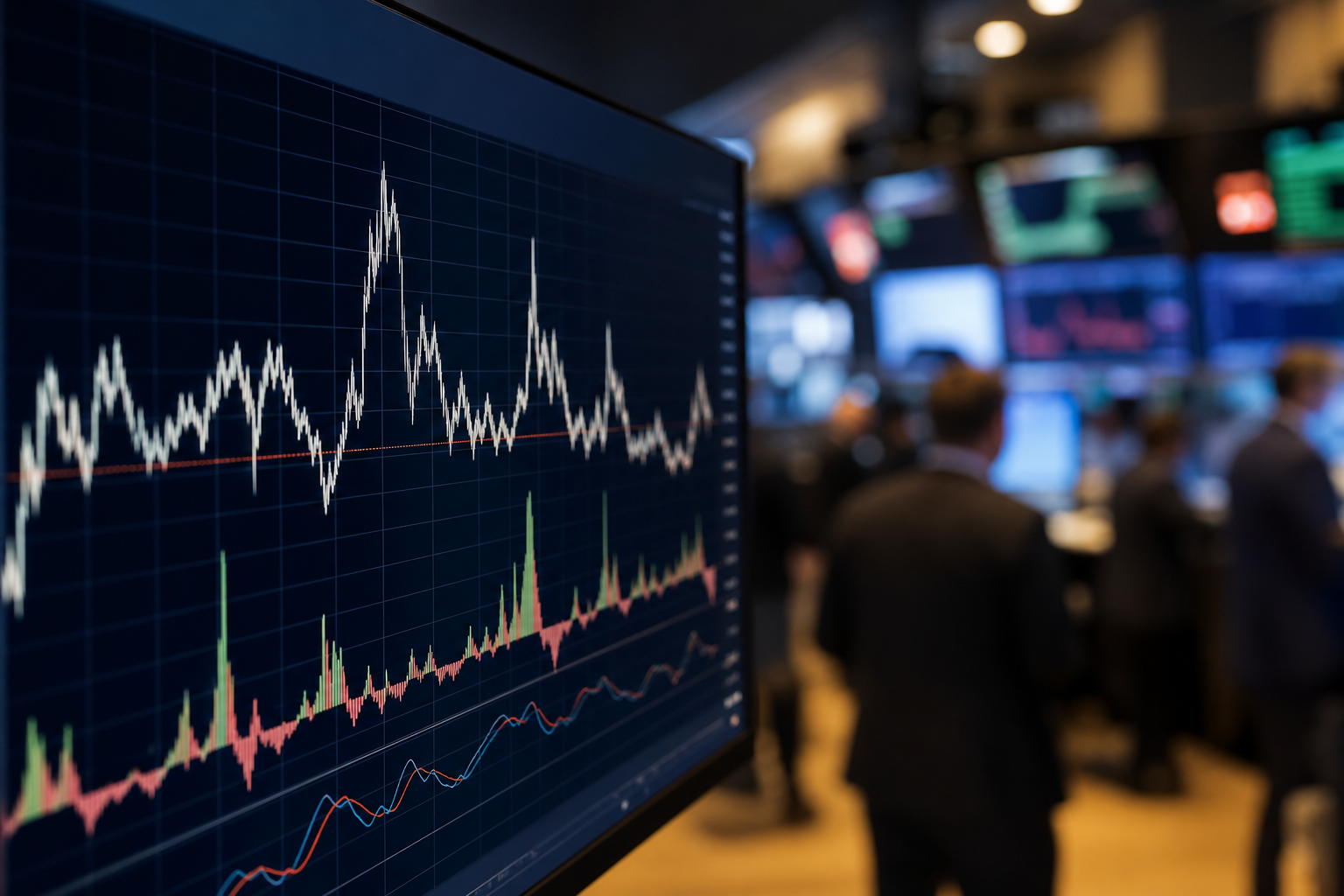
Despite a brief flirtation with 19.01—its highest level since April 28—the Cboe VIX Index ended down on Tuesday, leaving traders grappling with mixed signals as whipsaw action in the S&P 500 continues to reign. The VIX, often dubbed the 'fear gauge,' serves as a barometer for market sentiment, and its recent behavior suggests that traders are caught in a tug-of-war between optimism and uncertainty.
Of course, the catch is that a declining VIX amidst erratic trading could mean that while fear may be receding, underlying volatility is only masked, not eliminated. The S&P 500's recent swings have made it clear that the path forward is anything but linear, with the index exhibiting a propensity for rapid reversals that can leave even seasoned traders feeling dizzy.
As the S&P 500 oscillates, it’s crucial for traders to adopt strategies that account for this unpredictable environment. One potential approach is to lean into options strategies that can benefit from volatility spikes, such as straddles or strangles, which allow traders to profit from sharp price movements in either direction. However, positioning must be executed with care, especially given the VIX's unpredictable nature.
Furthermore, traders should keep an eye on broader economic indicators and news events that could serve as catalysts for the next major move. The interplay between interest rates, inflation data, and geopolitical events will likely continue to influence market sentiment and, in turn, the VIX. Understanding these dynamics could provide traders with the insights needed to navigate through the current volatility.
As the market continues to exhibit whipsaw behavior, the VIX remains a critical tool for gauging sentiment and anticipating potential shifts. Traders who can interpret these signals effectively will be better positioned to make informed decisions in what has become a complex trading landscape.
With the current market conditions, one question remains: How will traders adapt their strategies in the face of continued uncertainty?
Read more about the VIX and market volatility here.