
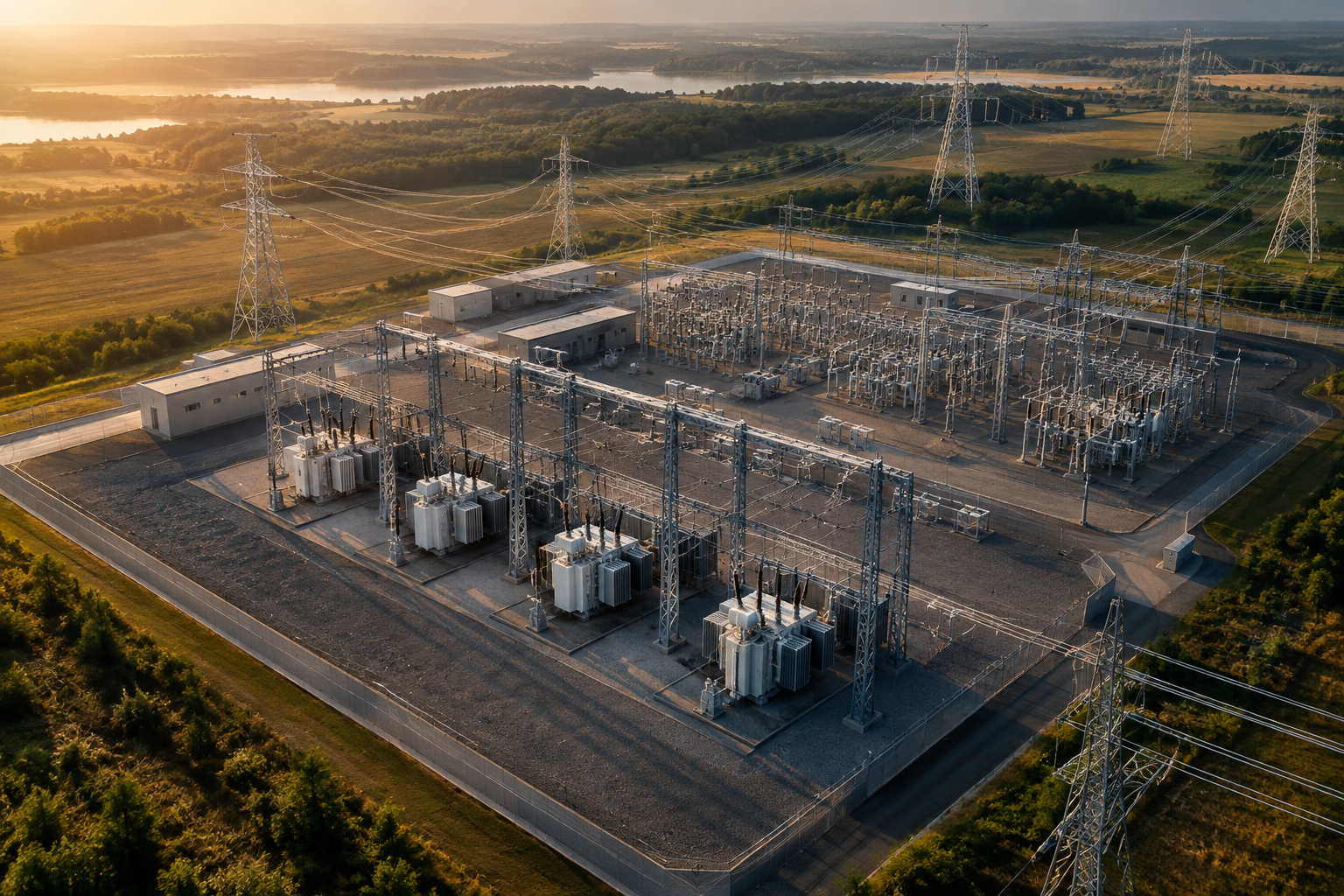
A C$14.3 billion all-stock merger would be large news in almost any industry. In Canadian utilities, where scale and steady income tend to matter more than dramatic plot twists, Emera and Canadian Utilities are proposing something closer to a change in the map.
The combination, reported by SeekingAlpha’s merger wire, would create a company worth roughly $50 billion. That makes this more than a routine corporate transaction for TSX investors: it is a significant consolidation of two established Canadian utility businesses, structured entirely in stock rather than cash.
Scale is the headline
The basic arithmetic is straightforward. Emera and Canadian Utilities have announced plans to merge in an all-stock deal valued at C$14.3 billion, with the combined company reported to be worth roughly $50 billion. The size of the resulting enterprise is what gives the transaction its sector-wide relevance.
An all-stock structure means the deal is centered on combining ownership interests rather than paying sellers cash. That matters because the transaction's outcome will be tied to the value of the combined company and to how shareholders assess the proposed ownership structure. It also places the emphasis on the strategic case for joining the businesses: whether a larger utility platform could offer advantages that the companies believe are meaningful enough to justify the combination.
That is the investor question hiding behind the headline. “Bigger” is a description, not yet an explanation. (In utility mergers, scale is often presented as the beginning of the argument, when shareholders still need the rest of the sentence.)
What it means for the Canadian utility landscape
The proposed merger could reshape the Canadian utilities landscape by bringing Emera and Canadian Utilities into a single roughly $50 billion company. That would make the transaction relevant beyond the two deal participants, particularly for investors who follow the sector as a collection of regulated, capital-intensive businesses.
Still, the available facts support a measured conclusion rather than a grand prediction. The announcement establishes the transaction's value, structure and intended scale. It does not, on its own, establish how the combined company would operate, what efficiencies it might achieve, or how its financial policies would change. Those details will determine whether the merger represents a durable strategic combination or primarily a larger corporate footprint.
The income-investor angle
For retail traders who follow utility companies for dividends, an all-stock merger raises a particularly practical set of questions. The transaction may change the ownership profile of the businesses and could affect how investors evaluate the combined company as an income holding. But the announcement details provided here do not specify dividend amounts, payout policies or any changes to distributions.
That absence is important. Income-focused shareholders will likely want to monitor the proposed ownership terms, the combined company's stated capital priorities and any information about dividend policy as the transaction develops. Until those points are available, the C$14.3 billion valuation tells investors how large the deal is—not what the income stream would look like afterward.
The next question for TSX investors
The proposed merger gives Canada's utility sector a major consolidation story, but the next phase will have to turn scale into specifics. Investors will need more detail on how the all-stock combination is structured, how the new company intends to manage its capital and what it means for shareholders who value utilities primarily for income.
For now, the bull case rests on the potential significance of a roughly $50 billion combined platform. The bear case is that size alone does not answer the questions most relevant to shareholders. The next disclosure will need to show whether this is a compelling utility combination—or simply a very large one.
Bull/Bear Verdict
Bull Case: The C$14.3 billion all-stock transaction could create a roughly $50 billion Canadian utility platform, giving the proposed combination meaningful scale in a sector where size may matter.
Bear Case: The announced valuation and scale do not yet establish the combined company’s dividend policy, capital priorities or operating benefits, leaving income-focused investors with important unanswered questions.