
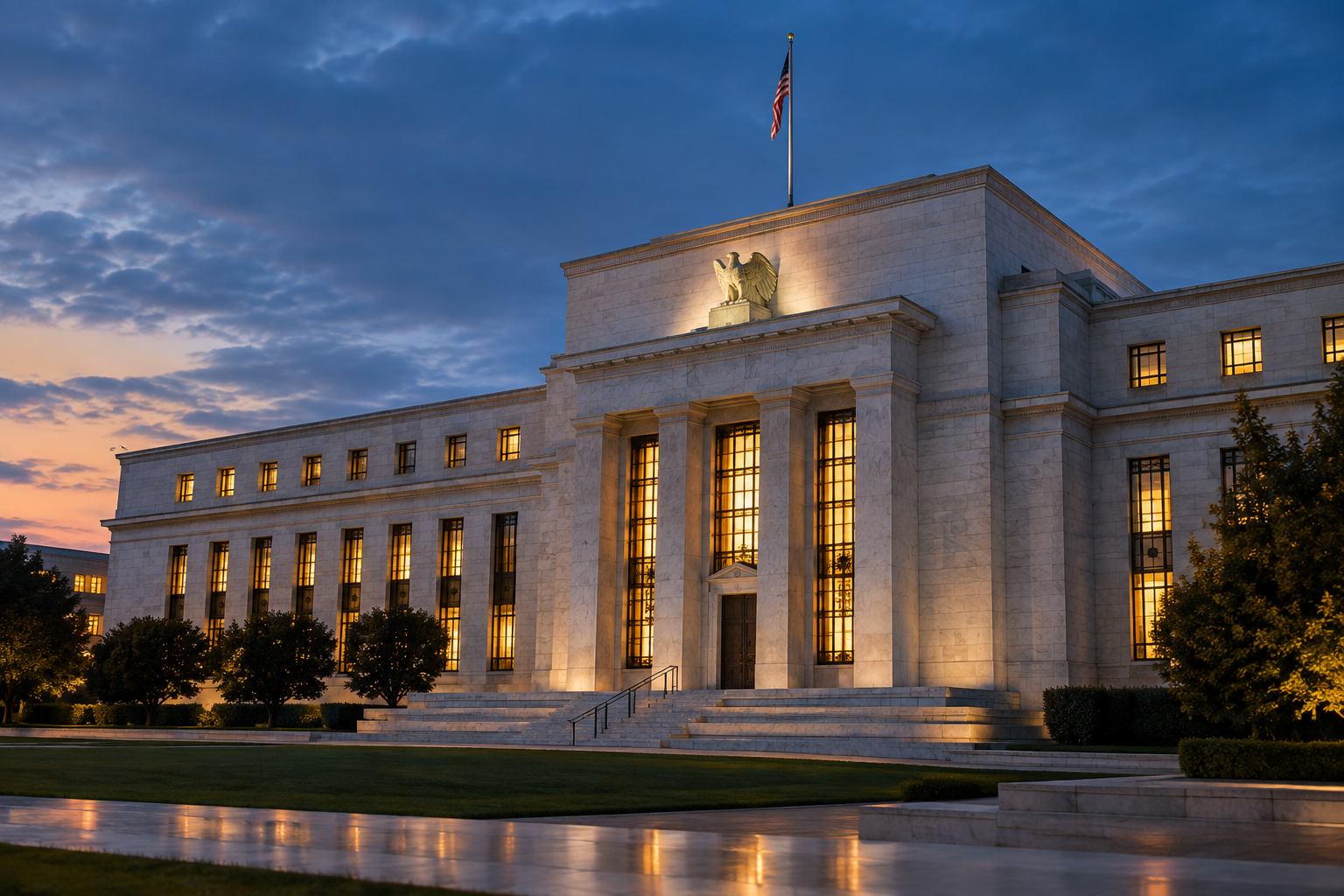
Inflation has reclaimed the driver’s seat in the market’s year-end conversation. Comments from two Federal Reserve officials have kept the possibility of additional rate hikes in view, reminding investors that the next policy move is not a settled script—but a live question still shaped by the path of prices.
That distinction matters across both US and Canadian markets. Higher policy rates could keep borrowing costs elevated, place upward pressure on bond yields and weigh on equity valuations, even before the Federal Reserve makes any actual decision. For portfolios looking toward year-end, the message is less about a confirmed hike than about the possibility that inflation may demand more restraint.
Two Fed voices, one persistent inflation concern
Philadelphia Fed President Anna Paulson said “modest” rate moves are likely ahead to tame inflation. She also said policymakers may need to raise rates further to bring inflation back to target. The language leaves room for additional action without specifying a date or the size of any move.
New York Fed President John Williams separately said it is “reasonable” to expect another rate hike by year-end while speaking at the London Macro Policy Forum. His comment adds another senior regional Fed voice to the debate over whether the current policy setting will be sufficient to contain inflation.
Together, the remarks keep the possibility of further tightening in focus. They do not represent a Federal Reserve rate decision, and neither official’s comments establish when a hike might occur or how large it might be. For investors, however, the policy signal can still matter: expectations about future rates often influence financial conditions before policymakers formally act.
Why borrowing costs remain central
If markets assign greater weight to the prospect of another rate increase, borrowing costs could remain higher for households, businesses and investors. That could affect financing decisions across the US economy and transmit through North American companies and consumers, including those exposed to Canadian credit conditions and cross-border demand.
Higher policy-rate expectations could also place upward pressure on bond yields. The assignment provides no current yield levels or market reaction, so the direction and scale of any move remain uncertain. Still, the basic mechanism is clear: a higher expected policy path may make fixed-income investors demand more compensation for holding longer-term debt.
That possibility creates a different backdrop for equity valuations. When rates are higher, the future cash flows used to value stocks may appear less attractive relative to fixed-income alternatives, and companies that rely heavily on borrowing could face greater financing pressure. The effect would not necessarily be uniform across the NYSE, Nasdaq, TSX or TSX Venture. It could vary by sector, balance-sheet strength and sensitivity to economic growth.
Inflation returns as the dominant portfolio worry
The broader concern is reflected in a Citi Wealth survey of family offices. Inflation was named their top investment concern for 2026, displacing tariffs. That shift suggests inflation is no longer merely a background economic statistic for large investors; it has become a central portfolio issue.
The survey does not predict a rate decision or guarantee a particular market outcome. It does, however, provide context for why the comments from Paulson and Williams may attract attention. If inflation remains the priority, policymakers may be less inclined to signal an easy path toward lower rates, while investors may continue weighing the consequences for bonds and stocks.
For US and Canadian markets, the key tension is therefore between inflation control and financial-market flexibility. A policy path that stays restrictive for longer could support the Fed’s effort to bring inflation back to target, but it could also keep financing conditions demanding. Conversely, if inflation cools sufficiently, the need for further hikes could diminish. The officials’ remarks leave both outcomes open.
A signal, not a decision
The most important takeaway is procedural as much as economic. Paulson’s reference to “modest” moves and Williams’ view that another hike by year-end is “reasonable” keep future action on the table; they do not announce that the Federal Reserve has raised rates or committed to a specific increase.
Investors may therefore treat the comments as a reminder to monitor inflation and policy expectations rather than as proof of an immediate market move. As the year-end horizon approaches, borrowing costs, bond yields and equity valuations could remain sensitive to each new indication of whether inflation is easing—or proving stubborn enough to require more central-bank pressure.
Read the Philadelphia Fed report on Anna Paulson’s comments, the account of John Williams’ remarks, and the Citi Wealth survey findings for the source details.
Bull/Bear Verdict
Bull Case: If inflation cools without requiring the additional rate increases described as possible by Paulson and Williams, pressure on borrowing costs, bond yields and equity valuations could ease.
Bear Case: If inflation remains the top concern identified by Citi Wealth’s family offices, further policy tightening could keep borrowing costs and bond yields elevated, potentially weighing on US and Canadian equity valuations.