
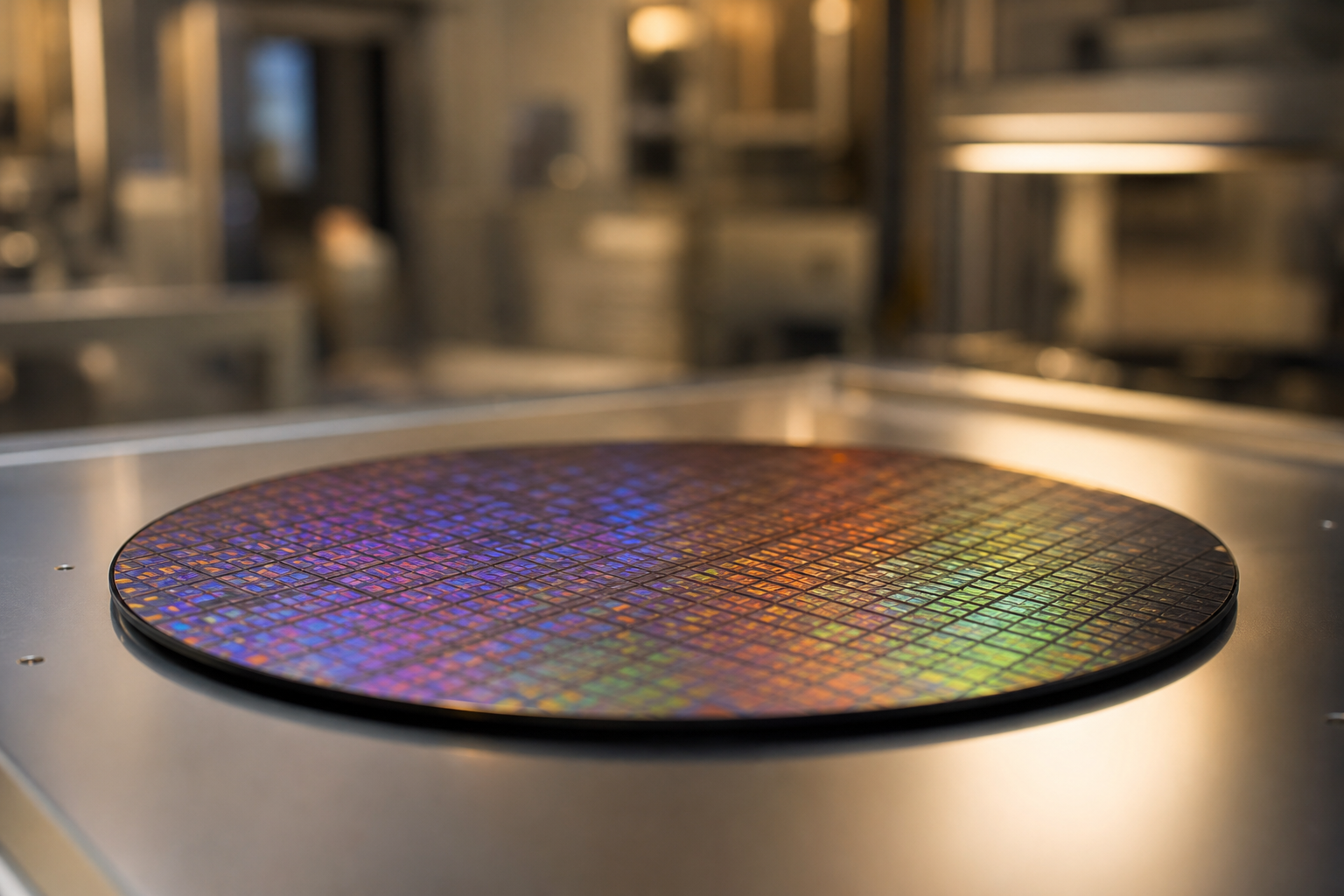
The Nasdaq Composite's 0.8% drop on July 2, 2026, serves as a sobering reminder of the volatility that often lurks beneath the surface of tech's relentless ascent. This decline, primarily fueled by key semiconductor stocks — $TER, $KLAC, $NVDA, and $MU — casts a shadow over market sentiment just as traders look toward the U.S. Independence Day holiday.
In what has become a familiar pattern, semiconductor stocks have once again taken center stage, dragging down the Nasdaq as investors grapple with mixed signals from both tech and defensive sectors. The declines in these pivotal stocks are more than mere blips on the radar; they highlight the fragile state of investor confidence as we enter a holiday-shortened trading week.
Tech Sector's Tug-of-War
The mixed signals from the tech sector are particularly telling. On one hand, the broader S&P 500 has managed to inch up just over 1% for the week, reflecting a certain resilience. Yet, small and mid-cap indices have struggled to maintain their recent outperformance. This divergence indicates a market grappling with uncertainty, as traders weigh the implications of leadership shifts in sector performance.
The semiconductor industry, often seen as a bellwether for the tech sector, is currently under pressure. The recent pullback in stocks like $NVDA and $MU is not just a reflection of their individual performance, but rather a symptom of broader market dynamics. As these companies navigate supply chain challenges and shifting demand patterns, their stock performance is a critical barometer for investor sentiment.
Defensive Sectors Show Relative Strength
Amidst the turmoil in tech, defensive and yield-oriented sectors have demonstrated relative strength. This shift suggests that investors are increasingly seeking refuge in more stable investments as uncertainty looms over the tech landscape. The decline in semiconductor stocks could be indicative of a larger trend where investors are prioritizing stability over growth as we head into the second half of the year.
As we approach Independence Day, the question remains: will this dip in semiconductor stocks signal a broader correction in tech, or is it merely a temporary setback? Traders would be wise to keep an eye on these developments, as the interplay between growth and defensive sectors will be crucial in shaping market sentiment in the near term.
In conclusion, the Nasdaq Composite's decline, driven by key semiconductor stocks, underscores the complexities that traders face in the current market environment. As we enter the holiday week, the balance between growth and stability will be a focal point for investors navigating the ever-evolving landscape of the stock market.
For further insights, visit Brave source.