
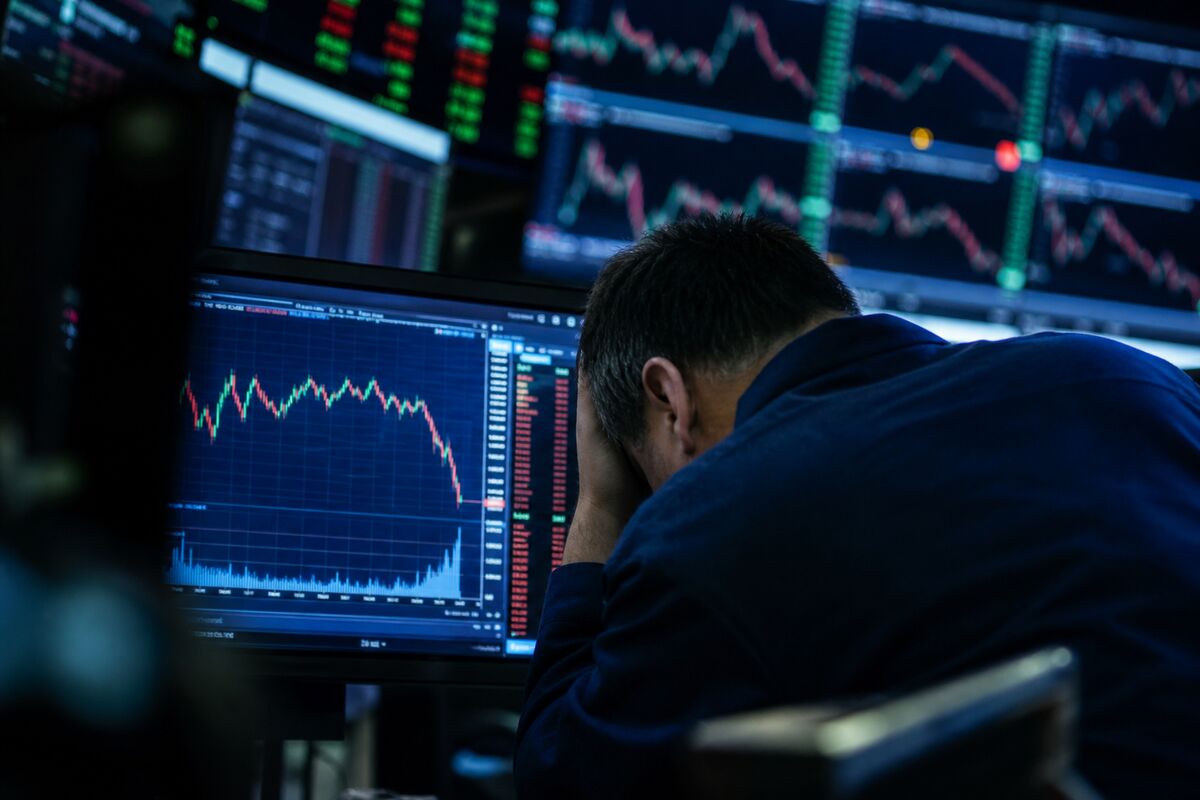
Wall Street’s fear gauge has started flashing amber. The VIX rose above 22 for the first time in four months as an AI-related stock sell-off rattled risk appetite, turning what had looked like a rough patch into a sharper test for US equity traders.
The message is not that markets must plunge from here. It is that the cost of uncertainty is rising—and options activity suggests some traders are positioning for volatility to climb even higher. With the S&P 500 and Nasdaq closing lower Friday, the market’s calm has begun to look less like a foundation and more like thin ice.
The VIX is best read as a market-risk indicator, not a crystal ball. Its move above 22 shows that investors are demanding more protection against expected swings, but it does not independently forecast the next direction for stocks. Volatility can intensify during both sharp declines and rapid rebounds, particularly when crowded trades are being reassessed.
AI weakness widens the market’s risk lens
The immediate spark was an AI-related stock sell-off. A rebound in chip stocks failed to stabilize the broader market, leaving the S&P 500 and Nasdaq lower Friday. That failed recovery matters because it suggests strength in one influential area was not enough to restore confidence across the major US indexes.
The pressure also arrived during a difficult stretch for the broader market. Major indexes were on pace for a weekly loss, while the S&P 500 fell 1.09% at one point during the week. Those figures do not establish a new trend by themselves, but paired with a higher $VIX, they show how quickly a concentrated stock setback can become a wider conversation about risk appetite.
What higher volatility can mean for traders
When expected volatility rises, daily price swings may become wider and harder to navigate. Options premiums can also increase as traders place a higher value on protection or on exposure to larger potential moves. That can make the market more expensive to hedge and can amplify the impact of incoming news.
The options market is adding another layer to the story. A cluster of trades indicates that some traders expect volatility to rise further. That positioning is not proof that another sell-off is imminent; it is better understood as evidence that market participants are preparing for a less forgiving trading environment.
Upcoming earnings could add to that sensitivity. When volatility is already elevated, earnings announcements and other company updates may produce larger-than-usual reactions as investors revise expectations. The same headline can carry more force when confidence is fragile, and options pricing may reflect that event risk before the news arrives.
A warning light, not a verdict
The most useful takeaway from the VIX move is measured rather than dramatic. The indicator is telling traders that uncertainty has increased, while lower closes in the S&P 500 and Nasdaq show that the concern is reaching major equity benchmarks. Still, the signal needs confirmation from subsequent market action rather than being treated as a standalone forecast.
For a closer look at the volatility move and the options activity behind it, CNBC’s market report provides the source context. The broader lesson is that portfolio risk can change quickly when AI-linked enthusiasm fades: wider swings, higher hedging costs and greater event risk may all arrive before a clear new direction emerges.
Bull/Bear Verdict
Bull Case: The VIX move above 22 may remain a risk warning rather than a lasting forecast, and the failed chip-stock rebound does not by itself determine what comes next for the S&P 500 or Nasdaq.
Bear Case: The VIX rising above 22, options trades pointing to higher volatility and the S&P 500 falling 1.09% at one point during the week could signal wider swings and greater earnings-related event risk ahead.