
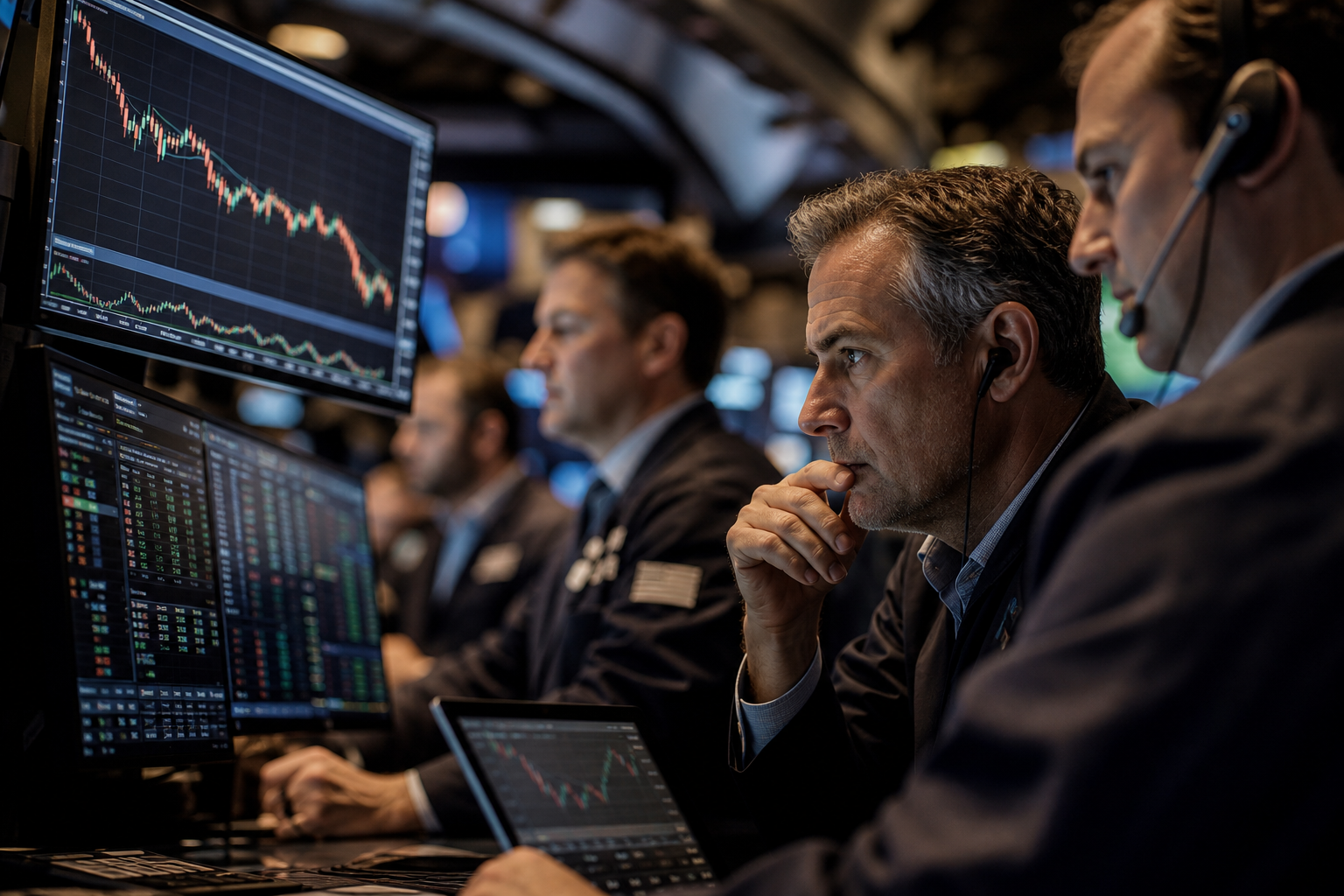
When fear evaporates from the market, traders must decide whether to embrace newfound optimism or tread cautiously. The Volatility Index (VIX), a key gauge of market sentiment, has fallen to 14.1, signaling reduced anxiety among investors. Yet, beneath this calm surface, inflation concerns loom large, threatening to disrupt the status quo.
The recent decline in the VIX suggests that traders are warming up to the idea of stability, as evidenced by the S&P 500 closing at 7,711.76, down just 0.25%, and the Nasdaq Composite at 26,402.42, down 0.52%. Despite these slight declines, the S&P 500 has seen a robust increase of 5.41% over the past month, showcasing a market that has been resilient even amid headwinds.
Understanding the VIX and Its Implications
The VIX, often referred to as the "fear index," measures the market's expectation of future volatility based on options pricing. A drop to 14.1 indicates that investors are less fearful about potential market swings, which can be a positive sign. However, a low VIX can also suggest complacency, a state that can precede sharp corrections if unexpected negative news surfaces.
As traders contemplate this low reading, they must also consider the backdrop of inflation risks. Fed Chair candidate Kevin Warsh's recent remarks have reignited discussions about inflationary pressures that could influence monetary policy decisions. His comments were noted as "more concerning," which could inject volatility back into the market if the Federal Reserve shifts its stance on interest rates.
Recent Market Performance
Despite the day’s minor setbacks, the broader trend for the S&P 500 has been positive over the past month, with a notable gain of 5.41%. This upward trajectory reflects a resilient market that has absorbed recent challenges. Traders should be cautious, however, as the interplay between a low VIX and potential policy shifts could lead to rapid changes in sentiment.
The sentiment reading from the University of Michigan, which stood at 51.7, also underlines the complexity of the current economic landscape. While the market has shown strength, consumer sentiment remains tepid, indicating that the recovery might not be as robust as it appears.
What Traders Should Watch For
As we move forward, traders should keep a close eye on inflation indicators and the Fed's response. The VIX may signal reduced fear now, but economic data and Fed commentary could quickly change the narrative. A sudden rise in inflation could force the Fed's hand, leading to tighter monetary policy and increased volatility.
The current market conditions present a paradox: a low VIX that suggests calmness alongside underlying economic uncertainties. Traders must navigate this complex environment with both optimism and caution, prepared for potential shifts in market sentiment.
For further insights into these developments, refer to CNBC's report on the VIX's year-to-date low and implications for traders here.