
For income investors, a court order can sound like paperwork. In the world of real estate trusts, however, paperwork is often where the next chapter begins. Slate Grocery REIT has received an interim order from the Ontario Superior Court of Justice (Commercial List), advancing the process toward a unitholder vote involving its TSX-listed securities, $SGR.U and $SGR.UN.
The order does not announce a completed sale, reorganization or other definitive outcome. It moves the process forward. Slate Grocery REIT has also provided meeting and circular details associated with the order, giving holders a clearer view of the formal steps leading to the proposed vote. For Canadian REIT investors, that distinction matters: the courtroom has opened the procedural door, but unitholders have not yet delivered the final verdict.
A procedural milestone, not a final result
An interim order from the Ontario Superior Court’s Commercial List is significant because it advances the mechanics of a meeting and vote. It helps establish the framework under which unitholders can receive information and decide how to respond to the matter before them. That is an important development for holders of $SGR.U and $SGR.UN, but it should not be confused with approval of the underlying proposal.
Slate’s announcement includes meeting and circular details tied to the court order. Those materials are central to the next stage of the process: they are where investors can examine the terms and rationale presented to unitholders before deciding how to vote. Until that vote occurs—and unless the relevant conditions are satisfied—the end state remains unresolved.
The most useful takeaway is therefore procedural rather than predictive. The trust has crossed a meaningful checkpoint on the road to a unitholder decision, while the available announcement does not establish what that decision will be.
Why the portfolio matters
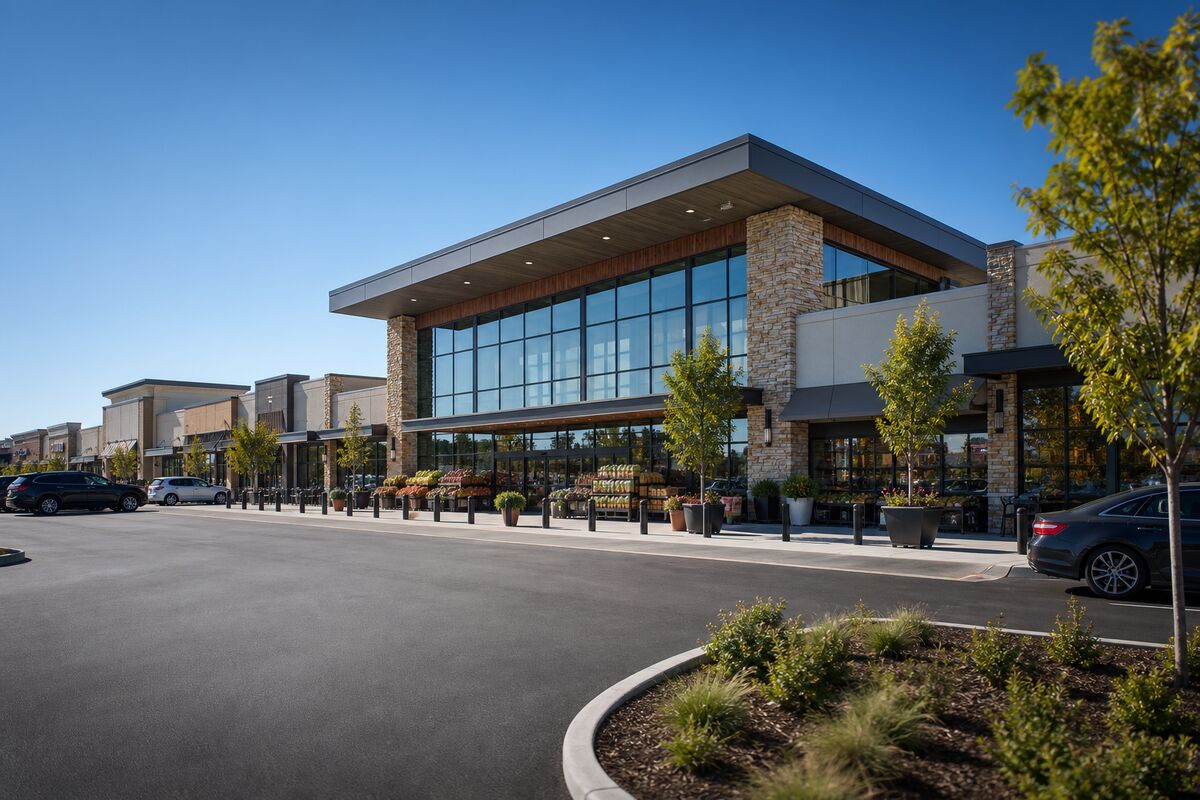
Slate Grocery REIT owns and operates US grocery-anchored real estate. That gives the pending process a cross-border dimension for Canadian income investors. The securities trade in Canada, while the real estate platform is located in the United States. Investors monitoring the situation are consequently watching both a Canadian listed trust and an American property portfolio.
Grocery-anchored real estate is a particularly relevant lens for understanding the trust’s identity. These properties are tied to retail locations built around grocery tenants, making the portfolio’s operating profile important to any discussion surrounding the trust’s future. The court order does not, by itself, change the portfolio or establish a new ownership outcome. It does, however, bring investors closer to a formal decision about the matter described in the meeting and circular materials.
That is why the development may command attention among Canadian income investors and REIT holders. A vote can become the point at which a proposed transaction or reorganization moves from boardroom documents into a decision by securityholders. Until then, the key task is to separate confirmed process from speculation: an interim order has been received, meeting information has been provided, and a vote is being advanced. No final transaction outcome or price is established here.
The investor watch list
Holders of $SGR.U and $SGR.UN may now focus on the meeting timetable, the circular’s explanation of the proposal, and the voting process. Those documents—not the existence of the interim order alone—will provide the substance needed to assess what is being asked of unitholders.
In market terms, Slate Grocery REIT has reached a new checkpoint, not a finish line. The Ontario court’s order advances the vote process, while the trust’s US grocery-anchored portfolio explains why the outcome could matter beyond a single Canadian-listed security. The next decisive step belongs to the unitholders.
Slate Grocery REIT’s announcement and meeting information are available in its court-order and circular update.
Bull/Bear Verdict
Bull Case: The Ontario Superior Court’s interim order and the release of meeting and circular details may indicate meaningful progress toward a unitholder vote, giving holders of $SGR.U and $SGR.UN a clearer formal process to evaluate.
Bear Case: The order does not establish a completed transaction, final reorganization or price, and the eventual outcome remains dependent on the unitholder vote and the information set out in the circular.